“The mallorquine practice TEd’A is a workshop and a studio. They propose to move forward by looking back, without losing sight of the past and tradition; to continue to perfect tradition as an indisputable heritage; to defend regional identities against totalizing uniformity. We prefer evolution to revolution.”
The position and work of TEd’A Arquitectes stands out to mark a cultural position against naïve technophilia. The office has a theoretical base and a body or work that substantiates their approach. The mallorquine practice belong to the generation of architects that has transcended the binary opposition of modernism versus postmodernism.
Without nostalgia, without self-aggrandizing pathos, their work shows how respectful syntheses of contexts are possible everywhere. Standing in line with similar architects who preceded them. TEd’A Arquitectes offer an approach that understands their presence and actions as simultaneously specific in time and opportunities as well as general and transcendent.
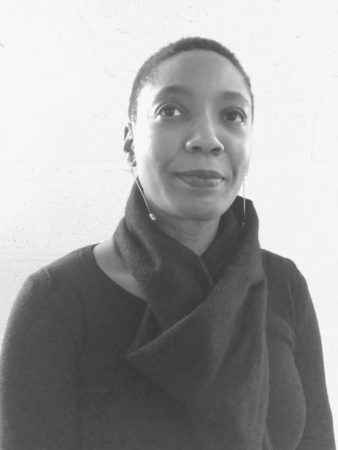
Itohan Osayimwese is an architectural and urban historian and Associate Professor of History of Art & Architecture at Brown University, Providence / USA. She engages with theories of modernity, postcoloniality, and globalization to analyze German colonial architecture, urban design, and visual culture; modern architecture in Germany; African and African diaspora material cultural histories; and the architecture of development in Africa. Another research interest is the architectural and urban lives of religious cults.
Her book, Colonialism and Modern Architecture in Germany, considers the effects of colonialism on the development of modern architecture in Germany from the 1850s until the 1930s. Her current book project, From Barbados to Boston, explores the transformative effects of migration on Anglo-Caribbean built environments and societies after Emancipation. Another book project introduces English-speaking scholars to the first German-language survey of African architecture published in 1894, and revises our understanding of the origins of the study of African art.
“If you are building today, it is of vital importance to understand that you necessarily always find yourself in a system of relationships”. This is the credo of the architect Lina Ghotmeh, who speaks out in this debate with committed statements, with her buildings and in the context of her teaching. After working with Norman Foster and Jean Nouvel, she taught at the École Spéciale, the most conceptual of the Paris architecture schools shaped by Paul Virilio.
Ghotmeh grew up in Beirut, where she studied at the American University. She was shaped by the time in Lebanon shortly after the civil war. In her methodology as an architect, she advocates an “archeology of the future” as precisely as possible as the starting point for every project. She understands this to mean analyzing what already exists, checking it for its – even painful – meanings + then relinking these with the social and political reality of life on site. Ghotmeh combines this translation service with a strong architectural concept.
To provide the best experiences, we use technologies like cookies to store and/or access device information. Consenting to these technologies will allow us to process data such as browsing behavior or unique IDs on this site. Not consenting or withdrawing consent, may adversely affect certain features and functions.
Functional
Always active
The technical storage or access is strictly necessary for the legitimate purpose of enabling the use of a specific service explicitly requested by the subscriber or user, or for the sole purpose of carrying out the transmission of a communication over an electronic communications network.
Preferences
Technical storage or access is necessary for the legitimate purpose of storing preferences that have not been requested by the subscriber or user.
Statistics
Technical storage or access solely for statistical purposes.The technical storage or access that is used exclusively for anonymous statistical purposes. Without a subpoena, voluntary compliance on the part of your Internet Service Provider, or additional records from a third party, information stored or retrieved for this purpose alone cannot usually be used to identify you.
Marketing
The technical storage or access is required to create user profiles to send advertising, or to track the user on a website or across several websites for similar marketing purposes.