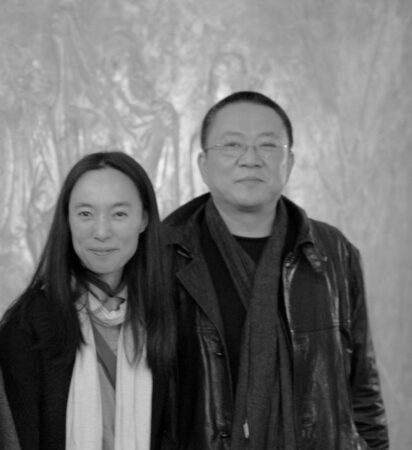
2006_Architekturpreis Anne Lacaton & Jean Philippe Vassal@privat
Awardee
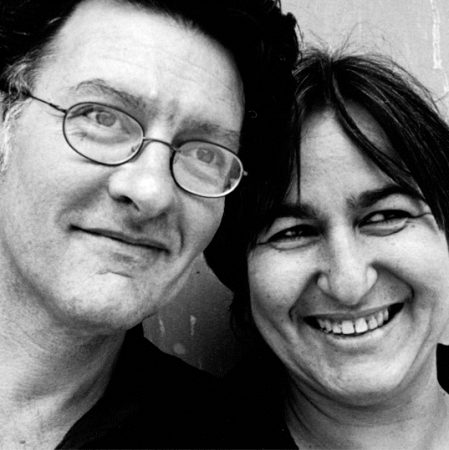
Through a radical return to the essentials, Anne Lacaton and Jean Philippe Vassal open up an opportunity for directly experiencing the spaces as well as the structural layers of the buildings they create. The Palais de Tokyo in Paris from 2001, in particular, was able to achieve this fruitful juxtaposition of temporary interventions for the service of contemporary art and the external claim to eternal existence made by the structures of the 1937 World Expo.
Placing less value on formal elegance, the designs of these two French architects focus on the intelligent application of simple, in part pre-fabricated, structural elements. This allows for the creation of succinct, cost-efficient structures that draw clear distinctions between vigorously defined cores and variously usable building envelopes, often developed in accordance with the principle of a greenhouse (Haus Latapie, Bordeaux 1993; house in Coutras 2000; apartment building, Mulhouse 2004-06).
In essence, the works of Lacaton & Vassal are guided by the question of the suitability of the materials to be used. Early on, their time together in Africa awoke an awareness within them about creative approaches to working with limited resources, about the open-ended utilisation of well-proportioned rooms, and about the importance of the quality of space over aesthetic statements.
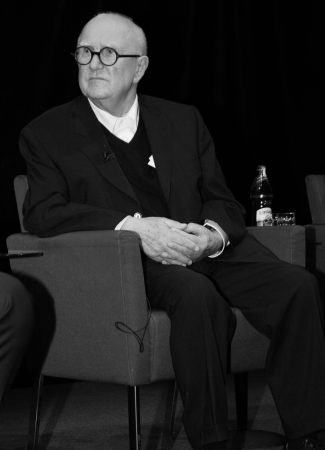
As a literary figure of many interests, Friedrich Achleitner belonged to the Vienna Group, wrote contributions increasingly concerned with architectural criticism and ultimately led to a systematic investigation of Austria’s building culture.
Achleitner has developed a special quality of precise analysis of buildings and over-arching development in architectural and urban history on the basis of a productive combination of literature and architectural criticism, which until now has shaped his rich oeuvre. Special mention should be made of the documentation on “Austrian Architecture of the 20th Century”, which is collected in three volumes and which has set the highest standards for historiography as well as for other fields. This comprehensive work is the result of many year’s research on the basis of careful evaluation of all accessible archival resources, personal visits of all buildings on site and their linguistically brilliant evaluation.
With typological studies of regionalism in architecture Achleitner gave an impetus to theoretical reflection on design practice which also had an international impact. Referred to as the “conscience of architecture”, he participates in current debates and is expanding his life’s work in further studies. (D. Steiner)
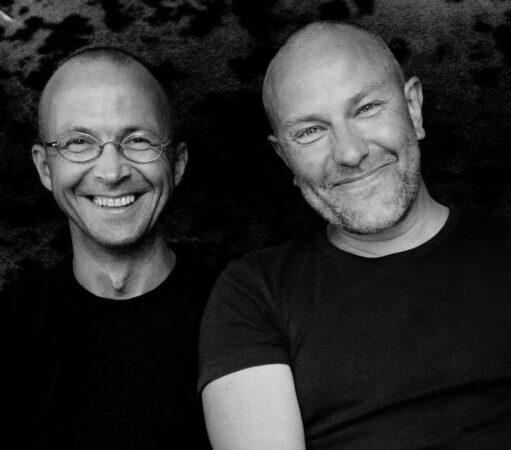
In search of paradigms for an entire culture, be it for building culture, regional culture or even an entire culture for our time, Jensen & Skodvin are developing a coherent architecture for all these three components of culture. This coherence stems from the basic principles to which they are adhering: their architecture has a mediating effect in the context of existing fabric, be it in relation to the given topography or built substance. As a result of this respect and understanding for this existing fabric the overall design reaches a poetic simultaneity.
Jan Olaf Jensen and Børre Skodvin are experts at aligning their buildings to key constructional and tectonic principles – despite the harsh climate conditions in Norway. They demonstrate in an exemplary manner how substantial and at the same time poetic architecture is possible today. Whether it is a residential building, hotel or church, it reveals itself to the observer. (W. Wang)
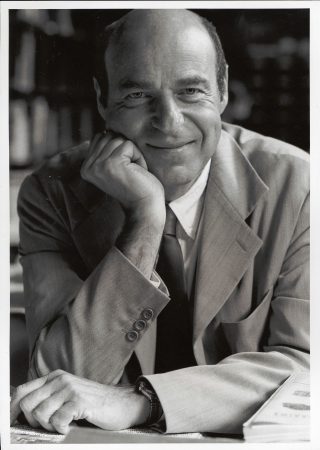
The work of the French architect, researcher, scientist and curator Jean Louis Cohen includes publications and exhibitions, which have made essential contributions to the understanding of international connections between prominent modern age architects and their impact. Cohen discusses building culture as a means of self-understanding beyond national traditions.
Involved in numerous research projects since 1973, Cohen precisely investigates the political, social and cultural conditions of the work of architects and city planners in various epochs. His research on architecture and city planning in revolutionary Russia is integrated in the discourse about the ambivalence of the modern age. His studies of Le Corbusier’s work in the Soviet Union have pervaded questions about the relationship between power and morality. Cohen also focuses on the eventful relationship between France and Germany.
The projects of German architects for cities and regions in France occupied during World War II, are also part of his studies along with the work of French architects in Germany after the war. Between meticulous research and a vivid display of the results at exhibitions and in extensive publications, Jean-Louis Cohen has succeeded like no other scientist in the history of architecture and planning to address a wide audience. At the same time he raises his voice in support of the quality of the environment created by human beings and against its endangerment due to the change in generations and epochs. (W. Durth)
In the shadow of the spectacular manifestos of China’s new architecture,Wang Shu & Lu Wenyu Amateur Architecture Studio is demanding a return to the historical tradition of Chinese architecture in its dialogue between crafts and landscape. The office is consciously working with local resources and materials and derives its poetic and atmospheric energy.
Beyond the global boom of vain icons, architecture thus returns to the point from which it has always started anew: in the use of local resources and the incorporation of local traditions. This attitude is thus a paradigm for every other region of the world. Perhaps it is a paradox that such a powerful counter position is being formulated in the realm of the very world power which is accelerating global development today.
To provide the best experiences, we use technologies like cookies to store and/or access device information. Consenting to these technologies will allow us to process data such as browsing behavior or unique IDs on this site. Not consenting or withdrawing consent, may adversely affect certain features and functions.
Functional
Always active
The technical storage or access is strictly necessary for the legitimate purpose of enabling the use of a specific service explicitly requested by the subscriber or user, or for the sole purpose of carrying out the transmission of a communication over an electronic communications network.
Preferences
Technical storage or access is necessary for the legitimate purpose of storing preferences that have not been requested by the subscriber or user.
Statistics
Technical storage or access solely for statistical purposes.The technical storage or access that is used exclusively for anonymous statistical purposes. Without a subpoena, voluntary compliance on the part of your Internet Service Provider, or additional records from a third party, information stored or retrieved for this purpose alone cannot usually be used to identify you.
Marketing
The technical storage or access is required to create user profiles to send advertising, or to track the user on a website or across several websites for similar marketing purposes.