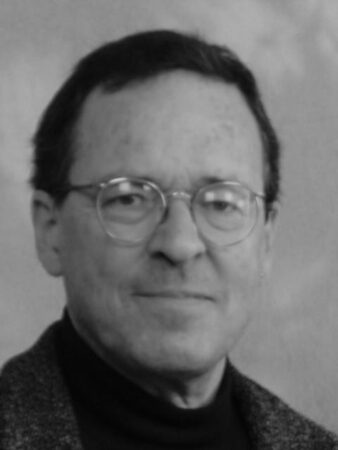
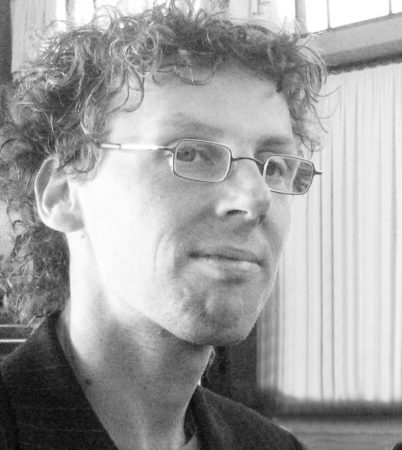
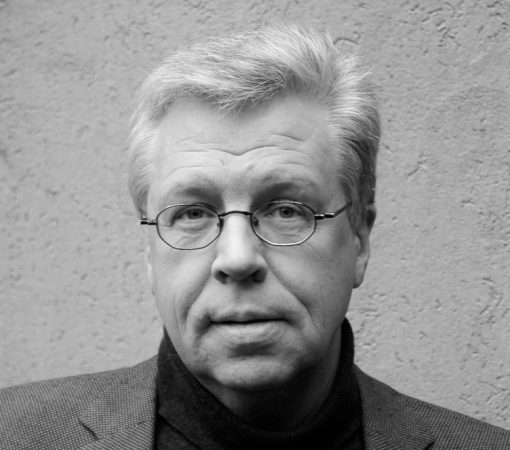
For four decades now, Martin Steinmann has been engaged at almost all levels of architecture: research, education, publications and practice. Above all, Steinmann has dealt with the conditions under which buildings come into being. In connection with his research and parallel to the foundation of the CIAM-Archive at the ETH-Zurich he developed his position on the continuation of modernism. By means of his editorships of the journals Archithese and Steinmann influenced architecture over a period of two decades not only in Switzerland. His ambition, that contemporary architecture has to be created in the public interest under the confluence of tradition and rules, has established high intellectual standards for himself as well as for his colleagues. (W. Wang)
Kazuyo Sejima already came to notice with her early buildings, which not only demonstrate an elegant formal composition and material assembly but also a thorough independent design approach. The Japanese architect starts from an abstract description of functional relationships, for which the respective building is intended, transposes this into a spatial diagram and transforms this diagram into architecture. The resulting buildings are as unusual as they are memorable, seemingly transcending any traditional typology, however, remaining closely related to their function.
In this manner, Sejima picks up the modernist thread, whose premises and ambitions she nevertheless interprets in an unorthodox and contemporary way. Distinct from her teacher Toyo Ito and most of his generation, she is not concerned with the exaggerated representation of the fleeting character of our times, but, on the contrary, with a contemplative deceleration – devoid of any nostalgia.
For over three decades Manuel Castells has devoted himself to the problems in architecture and urban development. His first book “La question urbane” of 1972 became a classic textbook in the field of urban sociology worldwide.
In his book “The City and the Grassroots” of 1983 Castells analyzed the role of social movements in European, North and South American urban developments. Already in 1989 he had conducted research on the influence of new information technology on economic and urban development processes.
With his three volume publication on “The Information Age: Economy, Society, and Culture: The rise of the Network Society (vol. 1), The Power of Identity (vol. 2), End of Millenium (vol. 3)”, Castells also had an impact on the discussion on de- and reurbanization processes.
Already with his thesis project Benjamin Foerster-Baldenius questioned the traditional activities of architects. The emphasis of his work lies in the planning and realization of events as well as ephemeral buildings such as for example the “bad ly”, a public swimming pool amongst building waste containers, or the 100 m long kitchen counter for the Architectural Forum Linz, both projects from 1999.
As a member of the Berlin group raumlabor Benjamin Foerster-Baldenius and his partners develop urban design and architectural projects, for which architectural collaborations are assembled according to need based on a “loose bunch, a pleasant network, two rooms with a little technology”.
Benjamin Foerster-Baldenius dares to forecast that “raumlabor will be one of the largest architecture networks in ten years, with 950 members worldwide and the first two thousand realized raumlabor projects. The name stands for green, witty and far too cheap.”
Through his clear designation of architectural and urban developments, the architectural sociologist from Berlin, Werner Sewing, has been providing intrepid as well as analytically rich critique for nearly a decade. The broad geographical extent and the depth of expertise with which Sewing has systematically advanced and penetrated into the heart of the issues at hand is particularly remarkable. He has authored texts about urban phenomena in the United States as well as about the second “Stone Berlin” and the involuntary transformation in the self-conception of the professional trade (included as a summary in Sewing’s book: Bildregie: Architektur zwischen Retrodesign und Eventkultur, Basel 2003).
Sewing’s essays and lectures are characterised by clear statements that are accessible to lay audiences as well. The Erich Schelling Architecture Theory Award, with an endowment of 10,000 euro, particularly recognises Sewing’s independent and exemplary efforts to ensuring that the complex transformations unfolding in architecture and urban planning are accessible to the general public from a socio-critical perspective.
To provide the best experiences, we use technologies like cookies to store and/or access device information. Consenting to these technologies will allow us to process data such as browsing behavior or unique IDs on this site. Not consenting or withdrawing consent, may adversely affect certain features and functions.
Functional
Always active
The technical storage or access is strictly necessary for the legitimate purpose of enabling the use of a specific service explicitly requested by the subscriber or user, or for the sole purpose of carrying out the transmission of a communication over an electronic communications network.
Preferences
Technical storage or access is necessary for the legitimate purpose of storing preferences that have not been requested by the subscriber or user.
Statistics
Technical storage or access solely for statistical purposes.The technical storage or access that is used exclusively for anonymous statistical purposes. Without a subpoena, voluntary compliance on the part of your Internet Service Provider, or additional records from a third party, information stored or retrieved for this purpose alone cannot usually be used to identify you.
Marketing
The technical storage or access is required to create user profiles to send advertising, or to track the user on a website or across several websites for similar marketing purposes.